

This report synthesises the findings of the global Commercial Pressures on Land research project, coordinated by the Secretariat of the International Land Coalition (ILC) with the support of one of its members, CIRAD, and the collaboration of more than 40 grassroots and civil society organisations, academics, and research institutions from around the world.Twenty-eight case studies, thematic studies, and regional overviews resulting from this project have already been published.1 In addition, this report incorporates the latest data emerging from the ongoing Land Matrix project to monitor large-scale land transactions.
Rome / January 2012 / 84 pagesArchives mensuelles: octobre 2013
8 articles
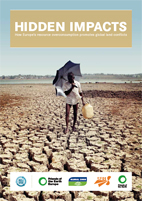
This report examines the inter-linkages between our material use and related land requirements and, through demonstrating this link, highlights the very urgent need to scale down our excessive consumption of this resource in the interests of maintaining the regenerative capacity of the biosphere, as well as conserving resources for future generations.The focus of this report is on Europe and its role as a major user of global land resources.
Vienna / February 2013 / 40 pages
Oxfam International - September 2011 - 3:43
Oxfam has been investigating how land grabs have pushed thousands of people into poverty. For their campaign, Oxfam has produced this video - based on Glengarry Glen Ross, the 1992 film where real-estate salesmen will do anything to make a profit.
Le rapport analyse deux études de cas: L’intervention de l’entreprise Jatropha Technology Farm / Senegal dans les communautés rurales de Nétéboulou et de Ndoga Babacar, dans la région de Tambacounda et l’intervention de SENETHANOL SA dans la communauté rurale de Fanaye (Département de Podor). Le rapport explique aussi le contexte avec une analyse de la sécurité alimentaire et de la situation du développement rural au Sénégal, le régime foncier et l’accès à la terre et les politiques sénégalaises de régulation et de facilitation des investissements étrangers dans l’agriculture.
Dakar (Cameroun), avril 2012 / 60 pages
Les transactions commerciales sur les terres agricoles ne sont pas un phénomène nouveau, mais l’accélération de leur rythme et l’importance de la taille des terres louées ou vendues au cours de ces dernières années revêtent un caractère spécifique. Si ces transactions permettent l’accroissement des investissements et des innovations, elles suscitent une forte opposition de la part des organisations paysannes et présentent des risques de fragilisation des droits d’accès des populations rurales à la terre, et des menaces pour la durabilité environnementale.
Paris / Novembre 2011 / 70 pages
Cambodia and Laos are in the grip of a land grabbing crisis, driven by Vietnamese ‘rubber barons’. This report reveals how two of Vietnam’s largest companies, Hoang Anh Gia Lai (HAGL) and the Vietnam Rubber Group (VRG), have leased vast tracts of land for plantations in Laos and Cambodia, with disastrous consequences for local communities and the environment. Close ties to corrupt political and business elites provide them with impunity, deals are cloaked in secrecy and they are bankrolled by international finance such as Deutsche Bank and the International Finance Corporation (IFC).
London (UK) / May 2013 / 10 pages

Land-grabbing is occurring at a significant extent and pace in Southeast Asia; some of the characteristics of this land grab differ from those in regions such as Africa. At a glance, Europe is not a high profile, major driver of land-grabbing in this region, but a closer examination reveals that it nonetheless is playing a significant role. This influence is both direct and indirect, through European corporate sector and public policies, as well as through multilateral agencies within which EU states are members. Looking at some of the cases of large-scale land acquisition in Southeast Asia, and the role played by the European Union, we put forward several observations and issues for discussion.
Amsterdam / January 2011 / 56 pages